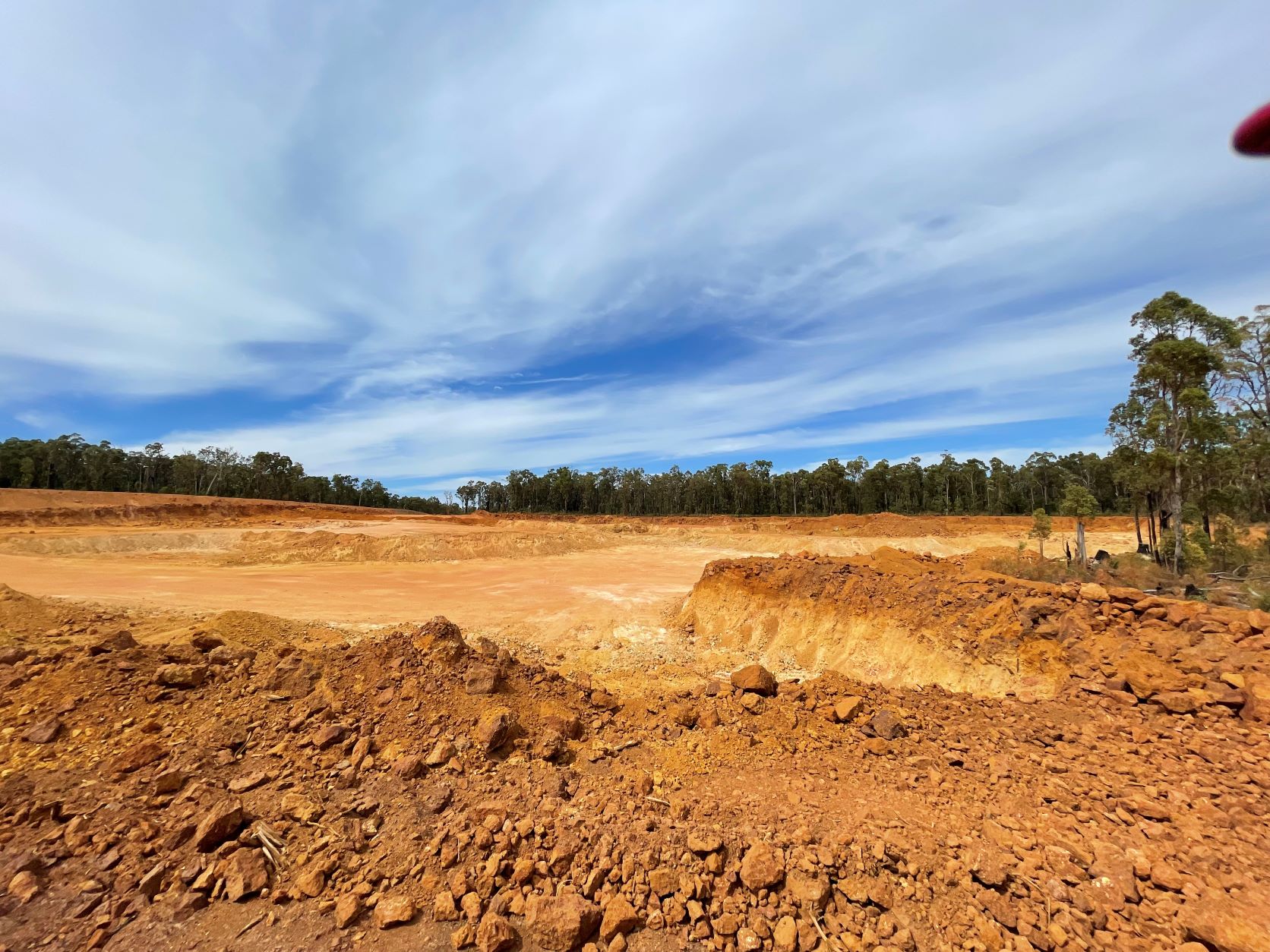
I wish to submit the following information with respect to the proposals
Alcoa’s Pinjarra Alumina Refinery Revised Proposal (Assessment 2253)
& Bauxite Mining on the Darling Range for 2023-2027 (Assessment 2385)
These proposals represent significant risk to several key environmental factors that the EPA is charged with protecting.
The proposals should be rejected in their entirety for the impacts on inland waters, and terrestrial fauna.
The precautionary principle should be applied in such a manner as to not allow the proposals to proceed in their current form.
The principle of intergenerational equity should be applied and as such the proposals should not be allowed to proceed.
EPA objective for Inland Waters:
To maintain the hydrological regimes and quality of groundwater and surface water so that environmental values are protected.
The proposal places the drinking water supply of Perth at unacceptable risk.
From the proponents’ documents Appendix 6
"The Huntly mine area intercepts the public drinking water supply catchments of Serpentine, North Dandalup, South Dandalup and Conjurunup. The Willowdale mine area intercepts the Stirling and Sampson Brook public drinking water supply catchments. Exploration activities are planned for the Canning, Mundaring, Wungong, and Harris Dam catchments."
There has been enormous concern by the Water regulatory authorities of WA about the impact of this exploration into water catchment areas, and the potential impacts.
During the course of assessment of this proposal the following statements have been issued by the Water Corporation, DWER and Department of Health:
“In summary, the key risks based on the state Government position and process are as follows:
- Serpentine Dam will potentially be unusable as a drinking water reservoir. This will impact both the natural surface water runoff we received as well as the ability to bank water in this dam – to a total of 25GL.
- Any risk to Serpentine Pipehead Dam places significant challenge to supplying water from the southern drinking water dams into the IWSS.
- Ongoing mining operations including exploration over the vast area of the Darling Scarp also places risks on other drinking water dams, including Canning and Wungong that direct supply to the IWSS, meaning additional water sources or storage is necessary to mitigate these risks.”
(DATE: 6 DECEMBER 2023 TO: FROM: THE BOARD GENERAL MANAGER OPERATIONS SUBJECT: WATER CORPORATION RESPONSE TO ALCOA’S MINE AND MANAGEMENT PLAN 2023-27 )
The WA Department of Health has stated that the 2023 Alcoa Transitional Approvals Framework2 ‘is not consistent with the published DWSP [Drinking Water Safety Plan] risk management objectives and Australian Drinking Water Guidelines’
(WA DoH, 2024)
Water Corporation has stated that the risk to the water supply of Perth is certain based on events reported to them by Alcoa during previous mining operations.
The report concludes that Alcoa’s operations present very significant risks to the Water Corporation’s operations with considerable implications for security of supply and dramatic potential future cost implications for its customers.
"There are a range of knowledge gaps and multiple overlapping areas of uncertainty, with a range of critical elements associated with long-term risks which remain poorly documented and understood. • Bauxite mining operations represent the single most significant risk to water quality in Perth Metropolitan and Southwest drinking water catchments. The potential long term financial implications for the Water Corporation and by extension are considerable."
( Catchment Risk Assessment Alcoa 2023 – 2027 MMP Procedural assessment under MS 728 informing the environmental audit of Alcoa’s 2023 – 2027 MMP. )
In fact the Water Corporation and the EPA were so concerned by the initial review of Alcoa's documentation that they recommended rejecting the proposal. The Water Board went so far as to remove themselves from any further decision making process due to a concern re "reputational risk" as the WA Government has to date failed to heed its warnings.
In response, the WA Government installed an alternative group -
the Bauxite Strategic Executive Committee (BSEC) – who would advise on all issues involving Alcoa and WA’s other bauxite miner, South32’s Worsley. The usual regulators were either removed from the system, or their voices silenced, as were the usual regulatory measures and standards. The responsibilities include:
“Consider risks to public drinking water resulting from the mining operations and help Government ensure there is a clear path of where mining is preferred into the future for both Alcoa and Worsley.”
This Government intervention to protect the industry over the express concerns of its own experts on Water raises significant concerns. (https://www.boilingcold.com.au/wa-labor-puts-alcoa-before-water-supply/)
The risk to the water catchments and Perth's water supplies are real and according to documents provided by Alcoa they will only contribute $100 million dollars in the event of a catastrophic outcome against a projected cost of at least $1.3 billion dollars. (DCMP Summary Table ES-01Provision of a $100 million financial guarantee that the State of Western Australia can draw upon should Alcoa’s operations cause a significant disruption to the public drinking water supply)
Water usage
This proposal will increase the use of water by the proponent.
"It is difficult to determine the total water use by Alcoa, with various figures used throughout the documents. It appears the Pinjarra Refinery uses on average approximately 7.43 gigalitres (billion litres) of water per year (GL/year) from ground and surface sources. Alcoa expects this to increase by 0.5-1 GL/ year when the refinery is upgraded to 5.25 Mtpa, but is still investigating how this additional water will be sourced (EX 8-151-153).
Alcoa’s existing mine operations use approximately 1 GL of water per year, primarily for dust suppression, sourced via water abstraction licences, harvested stormwater and recycled treated water.
Alcoa expects this to increase to up to 3.7 GL/year
(MMP 75)
For the Expansion, Myara North is expected to use up to about 3 GL/year and Holyoake 1 GL/year: an estimated use for O’Neil is not stated, but could be assumed to be similar to the 1 GL/year for current mining in the region. An additional 1.6 GL/year will be required for 18-months for the Expansion construction. Water is to be sourced from treated stormwater run-off and water from the Serpentine and South Dandalup Dams with supply still to be
negotiated by Watercorp (EX 8-147 and 1-56).
In total approximately 17 GL of surface and groundwater will be used by Alcoa each year on average, for mining and refining." (30072025-WAFA-Alcoa-PER-guide.pdf)
Of great concern however is the recent Auditor General’s overview of DWER and their ongoing failure to adequately monitor ground water use
"Auditor General’s overview
Water is a valuable and essential resource, critical to our everyday life, agriculture, industry and natural environment. Unlike much of the country, Western Australia relies heavily on groundwater; 78% of all water used across the State comes from groundwater aquifers. These precious resources, though hidden from sight, are significantly impacted by our drying climate and increased demand.
Licences to use water are typically given for free and contribute significantly to the State’s economy and wellbeing. Horticulture alone, much of which is dependent on irrigation by licensed water, creates close to $1.5 billion of produce annually.
As is the case for all our natural resources, poor management, over extraction and illegal taking of water all threaten the long-term sustainability of our groundwater supplies and create an uneven playing field for operators who are doing the right thing.
As regulator, the Department of Water and Environmental Regulation (DWER) has a critical role to ensure those licensed to extract and use water comply with their licence conditions. However, this audit shows that DWER is not doing anywhere near enough to adequately protect our water resources, and does not understand if conditions are complied with or how much water is actually being used.
Despite increasing demand for water and our drying climate, DWER has not adequately planned its monitoring activities. Compliance activities in recent years have been reactive, ad hoc and have decreased in number. We found DWER’s on-ground inspection programs are not planned and do not adequately reflect the risks to the State’s water resources or the distribution of licences.
DWER also needs to improve its enforcement approach, including more timely actions to address potential incidents of non-compliance and to better deal with and deter future breaches. This is the third report by my office that has found issues with the planning and monitoring of water use in our State. Our previous reports in 2003 and 2009 found that regulators’ efforts were not systematic or sufficient to ensure water was not being taken unlawfully."
(https://audit.wa.gov.au/reports-and-publications/reports/regulation-of-water-licences/)
The risk to groundwater supplies and in particular the risk to Perth's drinking water supplies means that this proposal cannot be approved in its current form. The failure of our Government to accept the advice of its own Departments of Water and Health places all of our drinking water at risk and facing astronomical costs to remedy what has been declared a "certain" event of contamination.
The lack of a watchdog with any capacity to investigate or monitor water usage raises further concerns that should trigger the EPA to reject this proposal.
EPA’s environmental objective for terrestrial fauna:
to protect terrestrial fauna so that biological diversity and ecological integrity are maintained
The three black cockatoo species are considered to be Matters of National Environmental Significance due to their endangered status.
"These guidelines apply to Carnaby’s cockatoo (Calyptorhynchus latirostris), Baudin’s cockatoo
(Calyptorhynchus baudinii) and the forest red-tailed black cockatoo (Calyptorhynchus banksii
naso), collectively referred to here as black cockatoos, anywhere they may occur in Western
Australia. These species are listed as threatened under the EPBC Act as follows:
Carnaby’s cockatoo: endangered.
Baudin’s cockatoo: vulnerable.
Forest red-tailed black cockatoo: vulnerable.
Listed threatened species and ecological communities are matters of national environmental
significance under the EPBC Act.
(referral-guidelines-wa-black-cockatoo.pdf)
They are subject to Nationally approved recovery plans which specifically state the following:
"Action 1: Protect and Manage Important Habitat
Complete restoration of the original extent of Carnaby’s cockatoo habitat is not possible. It is therefore important to identify those parts of the species’ habitat most critical to survival and to protect and manage as much of this important habitat as possible to minimise the impacts of habitat loss. While planting of species that support Carnaby’s cockatoo is effective over the long-term and encouraged, protection and regeneration of existing habitat is significantly more efficient and effective. Therefore efforts in this Recovery Plan are primarily directed towards protection and enhancement of existing habitat.
The reproductive output of Carnaby's cockatoo is primarily limited by factors associated with habitat and food requirements during the breeding season.
Management of breeding habitat and associated feeding habitat
Tasks include:
Ensure protection of areas of existing and potential breeding habitat, including consideration during statutory planning and environmental approvals processes.”
https://www.dcceew.gov.au/sites/default/files/documents/carnabys-cockatoo-recovery-plan.pdf
The extent of clearing in this proposal should automatically trigger rejection based on the likely effect on these birds. Coupled with a complete lack of any mitigation or offsets details, this proposal fails to adequately document or address the impact on the black cockatoo species.
The failure of the rehabilitation efforts as documented in the information provided by the proponent is most pronounced in recent years with respect to establishment of Marri , a key food resource for these birds. (Appendix 6 GHD rehabilitation peer review)
This proposal will significantly impact this iconic West Australian species and should be rejected for the size of the clearing foot print , the failure to adequately rehabilitate previously destroyed habitat and for non compliance with the Federally approved recovery plan.
EPA objective - The precautionary principle
Where there are threats of serious or irreversible damage, lack of full scientific certainty should not be used as a reason for postponing measures to prevent environmental degradation.
At a time of increasing concern around climate change and the impacts to our native forests, this proposal runs the significant risk of causing collapse of the Northern Jarrah Forrest due to widespread clearing, changes to the nature of the soil due to the removal of bauxite and self declared inadequate monitoring of rehabilitation efforts. There is simply too much that is unclear about the capacity of the forest and its associated ecosystems, which include Matters of National Environmental significance such as the three black cockatoo species, to justify ongoing destruction on the scale proposed by Alcoa.
From Water Corp documentation when reviewing these proposals:
"There are a range of knowledge gaps and multiple overlapping areas of uncertainty, with a range of critical elements associated with long-term risks which remain poorly documented and understood.
- Bauxite mining operations represent the single most significant risk to water quality in Perth Metropolitan and Southwest drinking water catchments. The potential long term financial implications for the Water Corporation and by extension are considerable.
The emerging impacts of climate change represent a significant complicating factor, likely to result in additional impacts to the underlying state of flux of the forest. The capacity of the forest to sustain mining operations is likely to be eroded over time, both as a result of climate change but also the impacts of mining itself.
This presents a high level of uncertainty, with associated risks arising from changes to wildfire risks and extreme storm events, potentially resulting in a significant escalation of erosion potential. It is likely that key tipping points exist, beyond which the forest’s capacity to resist future shocks and stressors will be surpassed. The IPCC have identified the Northern Jarrah Forest as at risk of collapse through the pressure of climate change alone. As a result, the scale and ubiquity of the proposed mining operations is considered a key risk factor, associated with impacts to both pathways and associated receptors. "
(Catchment Risk Assessment Alcoa 2023 – 2027 MMP Procedural assessment under MS 728 informing the environmental audit of Alcoa’s 2023 – 2027 MMP. )
The EPA should not allow implementation of these proposals in their current form to comply with its legislated requirement of application of the uncertainty principle.
EPA objective - The principle of intergenerational equity
The present generation should ensure that the health, diversity and productivity of the environment is maintained and enhanced for the benefit of future generations.
Alcoa has made claims of its capacity to rehabilitate the forest but the documents clearly show a complete failure of rehabilitation to Departmental expectations and a lack of compliance and remediation when problems are identified.
"Monitoring and self-certification process vulnerabilities Completion Criteria (CC) and the Working Arrangements (WA) Checklist focus on landscaping, soil return and fauna habitats, contour ripping, seeding and planting, including recalcitrant species. Monitoring, reporting and verification of rehabilitation outcomes are essential elements of ensuring rehabilitation is established appropriately, and also in ensuring stakeholder confidence in the process. Alcoa has indicated that an internal database tracks rehabilitation activities that occur across their operations. However, inaccuracies in reporting, and subsequent lack of remediation, could result in rehabilitation that does not meet post-mining land use objectives. Appropriate completion of rehabilitation earthworks (landscaping, soil return, fauna habitats, contour ripping), and seeding and planting are currently self-certified by Alcoa, and then reviewed and signed off by DBCA, via the Completion Criteria (CC) and Working Arrangements (WA) Checklist. However, this process can be vulnerable to inaccuracies. Lack of pit floor ripping over a substantial proportion of rehabilitation completed at Huntly in 2018, is likely to have led to erosion (e.g., pit Manning 15) and perhaps more importantly has the potential to constrain vegetation growth over the long term on all affected pits. In the Rehabilitation Checklist for the Manning 15 pit, pit floor ripping was signed off by Alcoa and DBCA as being completed appropriately. It is a concern that potentially substantial areas of rehabilitation at Huntly in that year may have been incorrectly prepared without internal certification processes detecting nor reporting the issue. An additional concern is that apparently remedial action has not occurred. This highlights vulnerability in the self-certification process and the importance of effective monitoring and evaluation by regulating agencies. It is important that the monitoring and certification process is rigorous, identifying areas that do not reach defined standards, that remedial action is taken as promptly as possible, and in turn it is monitored and reported appropriately.
(Appendix 6 P34 GHD rehabilitation peer review)
"Marri establishment The successful establishment of marri trees in rehabilitation is an important factor in ecological resilience and development of fauna habitat. It is worth noting that in recent years, such as 2019 to 2021, data provided to Stantec indicated that marri establishment has not been as successful as the longer-term average, with a total 991 ha over three years that did not meet the marri density target at nine months of age. Given the size of the area requiring in-fill planting with marri, and the importance of marri as a food source for black cockatoos, some follow-up monitoring of the success of the remedial actions is warranted, particularly in larger remediated areas. Alcoa have commenced an investigation into the reasons for relatively low success rates in recent years. This information will be important for future rehabilitation outcomes. Understorey cover A diverse and productive understorey is an important element of rehabilitated forest, as reflected in late-stage completion criteria of the current era, which indicate richness, density and cover as key elements for acceptance. Stantec, has not received or reviewed any monitoring data related to understorey cover. More-detailed monitoring of understorey performance could be undertaken to determine if recent-era rehabilitation was on track to achieving cover targets.
Marri establishment The successful establishment of marri trees in rehabilitation is an important factor in ecological resilience and development of fauna habitat. Recent monitoring data indicate inadequate seeding success rates of marri in rehabilitation completed between 2019 and 2021 against established completion criteria, with a large area of rehabilitation (approximately 991 ha) requiring remedial infill planting in coming seasons. While Alcoa have commenced an investigation into the reasons for this, it is unclear how information from this investigation will inform remedial actions or changes to the rehabilitation method. A sub-indicator under BI 3 – Ecological condition of native vegetation, identifies overstorey (tree) species richness as a measure of the establishment of overstorey species during rehabilitation. Alcoa have identified that in order to maintain ecological integrity of the NFJ, species richness of the overstory in rehabilitated areas should be comparable to non-mined forest. The monitoring method proposed for this sub-indicator is biennial image capture and analysis, coupled with annual on-ground vegetation plot monitoring. The response trigger would be a statistical reduction in overstorey species richness greater than two standard deviations, with the initial response being on-ground assessment of areas where exceedances occurred to investigate potential causes. However, it remains unclear in the BI monitoring framework whether there is a commitment to use the results of initial causal investigations to inform corrective actions and management strategies and how assessment of the BIs are linked to the existing environmental closure risk assessments. As such, the link between initial response (investigation), corrective action and adaptive management to ensure ongoing ecological integrity remains deficient."
(Appendix 6 P29 GHD rehabilitation peer review)
"Remedial action and outcomes
Accurate monitoring and evaluation are fundamental to ensuring an effective adaptive management system. A critical element in judging success of rehabilitation is the frequency and scale of failures to meet agreed earlystage completion criteria, given that initial establishment can affect the rehabilitation vegetation community for decades. Timely remediation of areas of inadequate rehabilitation relies on the accuracy of monitoring and the self-certification process. During this review we identified opportunities for improvement to the monitoring and evaluation process, particularly for remedial or corrective actions that would be critical to reducing vulnerabilities, provide a strong evidence-base to support adaptive management and allow a more robust and credible evaluation of rehabilitation success including: − early identification of potential non-compliances and causes during rehabilitation works; − provision of accurate information to DBCA during the onsite Checklist process; − completion of remedial work within the designated timeframe, to facilitate long-term success; − improved record keeping and database management of all remedial actions; − early evaluation of the success of remedial works; − incorporation of findings from remedial evaluations into rehabilitation planning and ongoing management strategies; − holistic, catchment-wide assessment of rehabilitation success that includes a quantitative assessment of rehabilitation classified as ‘low quality', and possible causes; and − regular, robust and transparent auditing of rehabilitation performance. Addressing these issues requires accountability to be embedded into the monitoring framework at various points and ensuring that appropriate internal and external knowledge systems are integrated. Ensuring the optimal functioning of the monitoring and evaluation framework is fundamental to ensuring ongoing ecological integrity and Alcoa’s social license to operate. We also suggested that consideration could be given to incorporating these improvements into DBCA working arrangements and completion criteria."(Appendix 6 P34 GHD rehabilitation peer review)
These documents provided by the proponent show disregard for monitoring and remediation. They use an outdated model of rehabilitation to claim successful rehabilitation of large areas but note that the monitoring ceases at 15 months. This is in an ecosystem that evolves over 40-400 years.
When more appropriate models of rehabilitation are used by world renowned experts the results are devastating. None of the 27,860 hectares of native vegetation cleared by Alcoa up to 2021 have been found to meet the government’s rehabilitation completion criteria, according to WA’s Department of Biodiversity, Conservation and Attractions.
(Milne, 2023 WA Today:Alcoa in WA: 60 years, 28,000 hectares of forest cleared, zero rehabilitation completed)
"The State Government has provided clear expectations for Alcoa for the quality of rehabilitation as determined by the agreed completion criteria and the conditions accompanying the approval of the 2023-2027 [mining management plan].
DWER's review made recommendations for Alcoa to rehabilitate mine sites "in consideration" of a new international framework for mine site recovery, launched at the UN Biodiversity Conference in 2022.
It's the same framework Professor Dixon's study used in its review of Alcoa's mine sites.
The company is required to rehabilitate the land it mines before returning it to the state, but hasn't completed rehabilitation of any of the 280 square kilometres of forest it has cleared, according to the WA government.
Alcoa says it is confident the land it has mined can be restored, but a review published in scientific journal Restoration Ecology indicates that may not be possible.
The review holds the company's rehabilitation efforts to a new international standard and has concluded Alcoa's results are "substandard" and are on a "poor to declining trajectory".
Study co-author Professor Kingsley Dixon said Alcoa could be permanently impacting the ecosystems it has mined, which are also home to endangered species, including Carnaby's black cockatoos, quokkas and western ringtail possums."
(https://onlinelibrary.wiley.com/doi/full/10.1111/rec.14236)
The current proposals interact with the iconic Bibbulmun walking trail and Mundabiddi cycle paths. Future generations' ability to interact with our jarrah forest and enjoy nature will be adversely impacted by these proposals due to the close contact of mining proposals with these community trails.
The mining activities have not been able to be adequately rehabilitated and there are clear deficiencies in the self monitoring and compliance of the company. Once the Jarrah forests are cleared, there is no return. This fails the intergenerational equity test and therefore the proposals in their current form should not be implemented.
Summary